
Science Highlights
Jansky Very Large Array Detections of CO(1-0) Emission in H I-absorption-selected Galaxies at z>=2
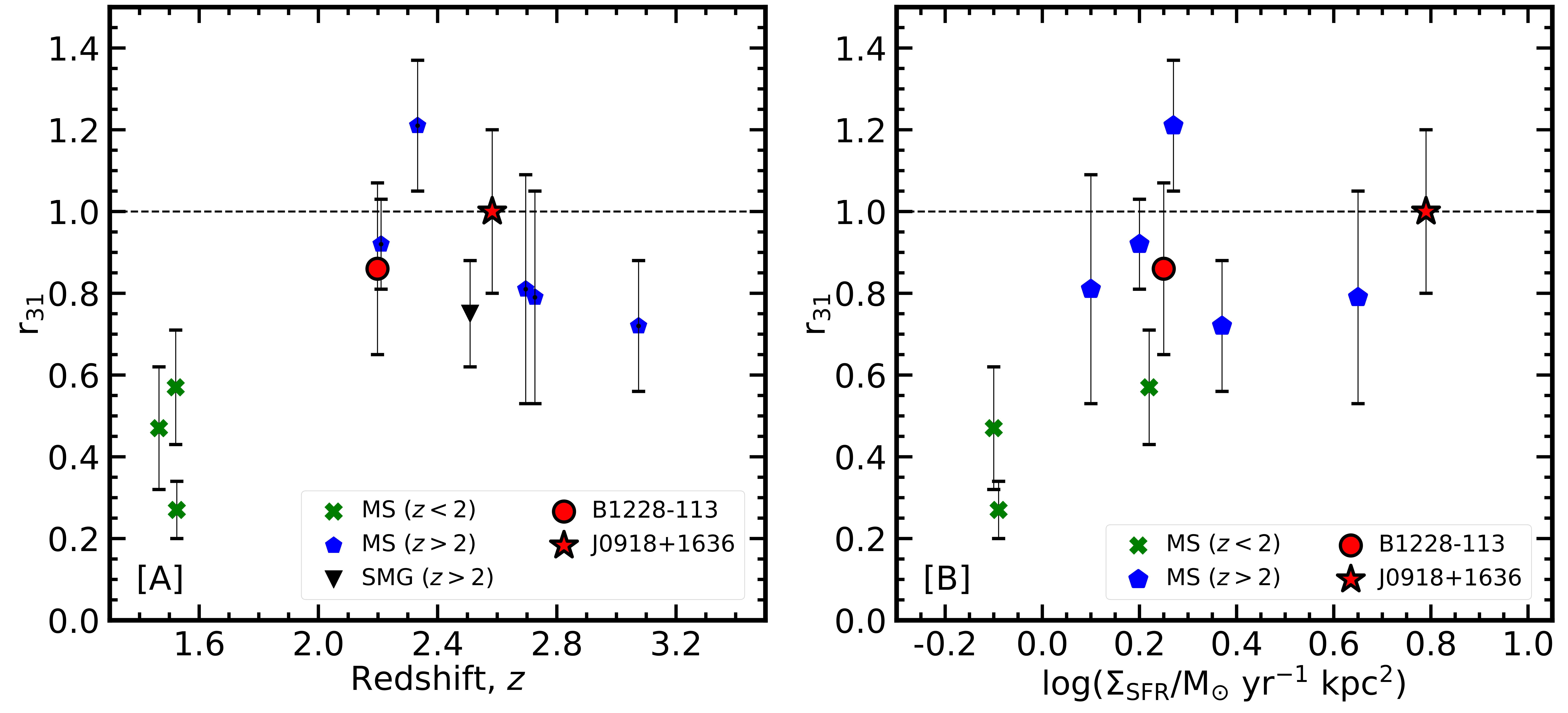
Our current understanding of galaxies and galaxy evolution is based on studies of emission-selected galaxy samples. Such samples contain a luminosity bias, i.e. they are biased towards brighter galaxies, especially at high redshifts. However, it is possible to also identify high-redshift galaxies via their Ly-alpha absorption signature in the spectra of background quasars; such "recentResults"HI-absorption-selected galaxies do not have the above luminosity bias. In order to understand HI-absorption-selected galaxies and their connections to the emission-selected population, we must first detect them in emission and then characterise their stellar and gas properties. Kaur et al. used the Jansky Very Large Array to search for CO(1-0) emission from three such HI-absorption-selected galaxies, at z~2, that were earlier identified with ALMA using CO(3-2) or CO(4-3) emission. They detected CO(1-0) emission from two HI-selected galaxies, DLA0918+1636g at z=2.5832 and DLA1228-113g at z=2.1933; these are the first detections of CO(1-0) emission in high-z HI-absorption-selected galaxies. Kaur et al. infer molecular gas masses for the two detected galaxies that are ~1.5-2 times lower than earlier estimates based on the mid-J CO lines. Kaur et al. also used the JVLA data to determine the CO spectral line energy distribution in the three galaxies. They find that the J=3 and J=4 levels are thermally excited in DLA0918+1636g, while the data are consistent with thermal excitation of the J=3 level in DLA1228-113g. In the case of the third galaxy, DLA0551-366g, no CO(1-0) emission was detected, yielding lower limits on the excitation of the J=4, J=5, and J=6 levels. Kaur et al. also compared the CO excitation of the HI-selected galaxies with that of the Milky Way, main-sequence galaxies, and sub-mm galaxies at high redshifts. They find that the CO excitation in HI-selected galaxies is similar to that of massive main-sequence galaxies at z>2, but higher than that of main-sequence galaxies at z~1.5. They also compared the ratio of CO(3-2) and CO(1-0) line luminosities (r_31; see attached figure) in different types of galaxies, and find that all galaxies at z>2 have both a higher r_31 value (implying a higher excitation of the J=3 level) and a higher SFR surface density than the main-sequence galaxies at z~1.5. The higher CO excitation in galaxies at z>2 may thus arise due to their higher SFR surface densities, as suggested by earlier theoretical studies.
A gamma-ray pulsar timing array constrains the nanohertz gravitational wave background
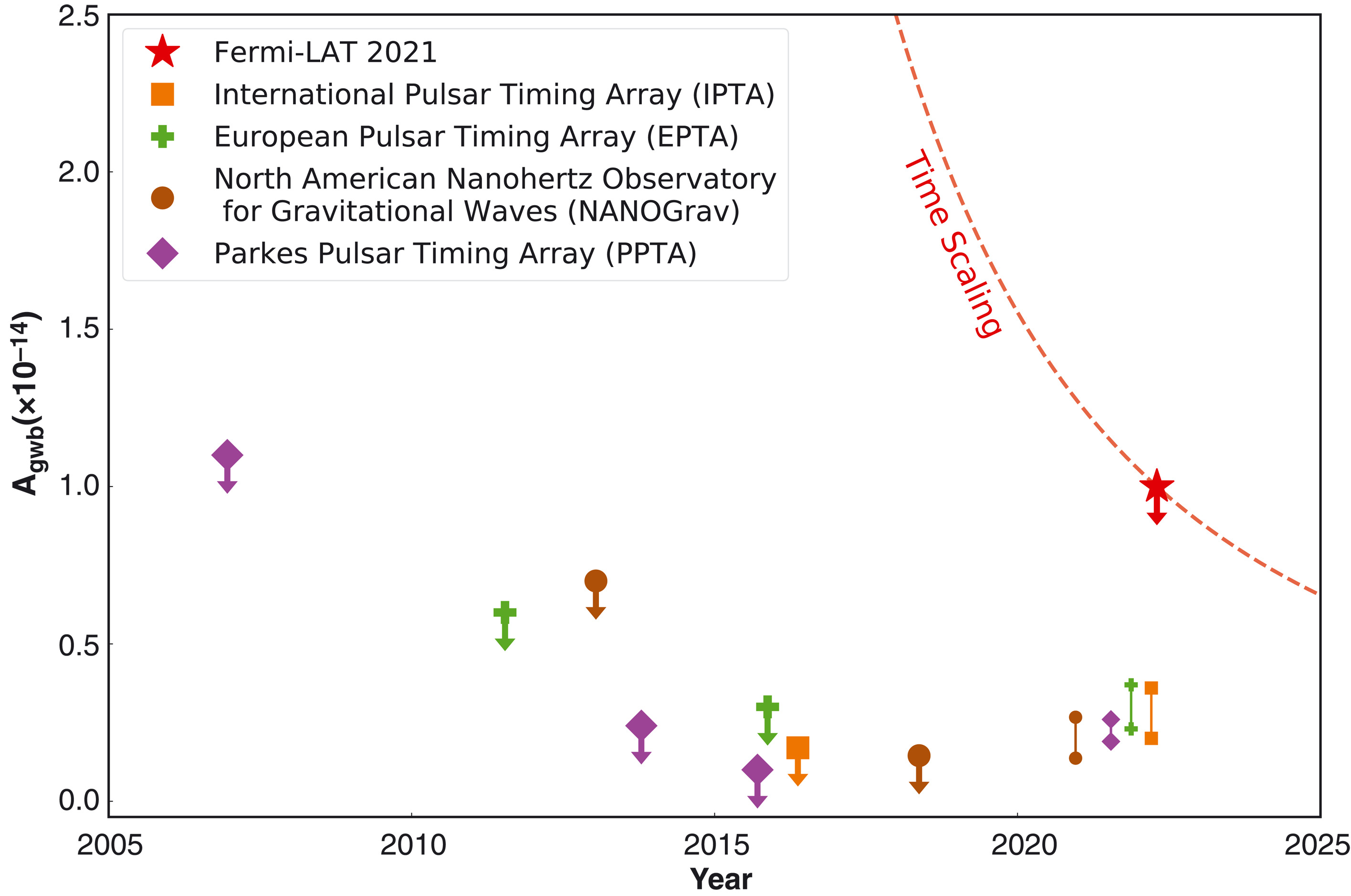
Millisecond pulsars are extremely stable rotators allowing to use these as celestial clocks. An ensemble of these can be used for efficient detectors of gravitational wave signals. This paper presents a pulsar timing array implementation by the Fermi-LAT collaboration using 12.5 years of Fermi-LAT data from 35 bright gamma-ray millisecond pulsars file that achieved a sensitivity close to that aimed by the approaches of radio timing of the millisecond pulsars. The sample of millisecond pulsars includes Fermi-directed discoveries using the GMRT, where the gamma-ray pulsation was discovered after folding LAT photons with the timing model derived using the GMRT observations. This paper place a 95% credible limit on the GWB characteristic strain of 1.0 x 10^-14 at a frequency of 1/year. This result provides an independent upper limit on the gravitational wave background signal. This is important since this method as well as the radio timing methods are subject to different noise sources. The observed sensitivity of detection is expected to improve with the observing time span. The figure shows the constraints on the GW background from radio and gamma-ray PTAs. The inferred constraints on the GWB amplitude at 1/year (Agwb) are plotted as a function of the publication date. Colored symbols correspond to each of the PTAs indicated in the key. Upper limits at 95% confidence are shown as downward arrows, and amplitude ranges indicate detections of a common noise process, which could be the GWB or have other origins. The Fermi-LAT 95% upper limit, 1.0 x 10^-14, uses data obtained up to January 2021 and is plotted at a publication date of April 2022. The dashed red line indicates the expected scaling of the Fermi-LAT limit as a function of time.
A Green Pea Starburst arising from a Galaxy-Galaxy merger
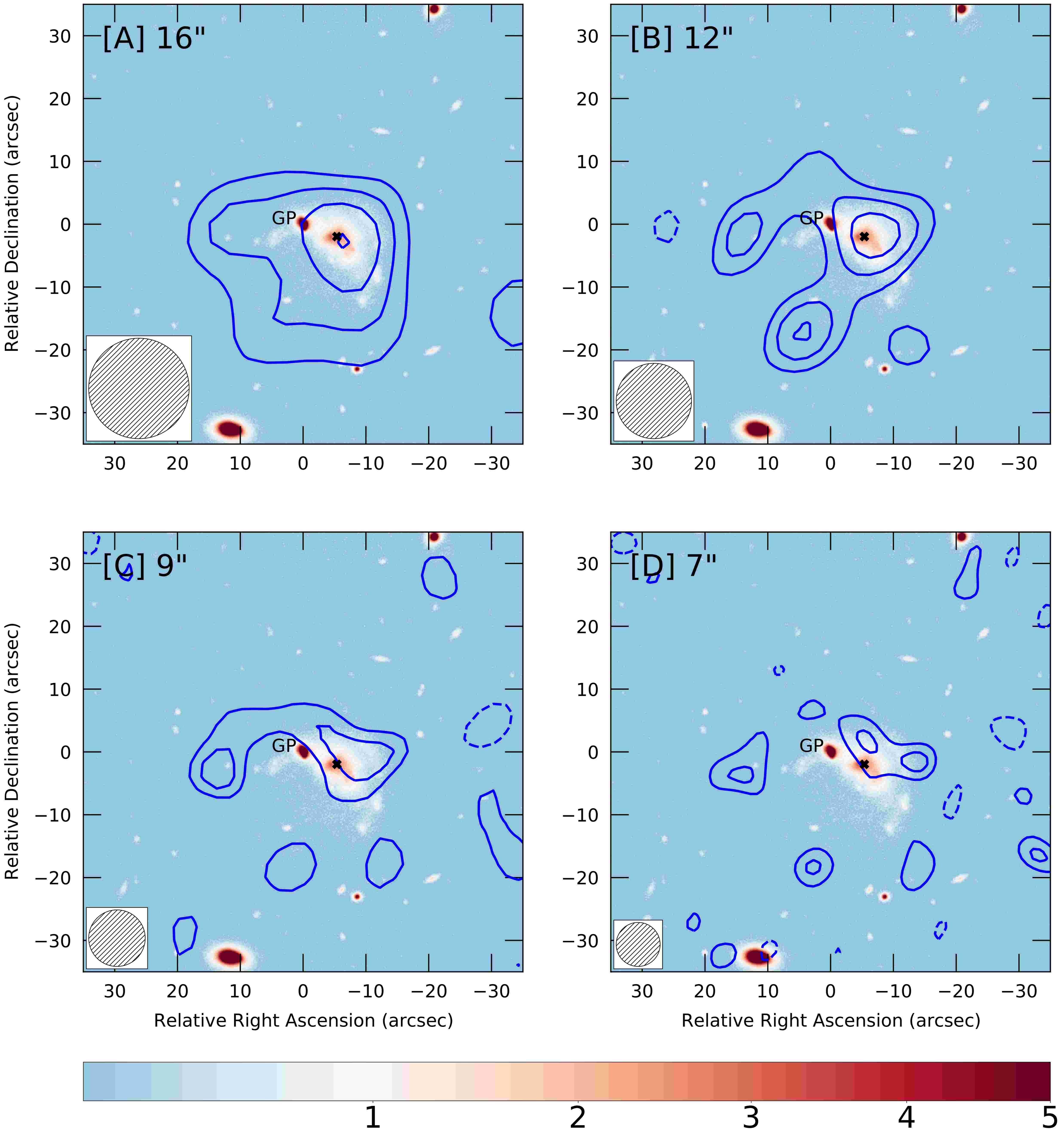
Faint star-forming dwarf galaxies have long been believed to be the main contributors of the Lyman-continuum (LyC) photons that ionized the early universe. Green Pea galaxies are low-redshift starburst dwarf galaxies with properties similar to those of the high-redshift galaxies, making them important proxies to understand how ionizing radiation escapes the high-redshift galaxies. Purkayastha et. al. have used the Giant Metrewave Radio Telescope (GMRT) to carry out the first mapping of the spatial distribution of atomic hydrogen (HI) in and around a Green Pea, GP J0213+0056 at z=0.0399. GP J0213+0056 shows both strong HI 21cm emission in single-dish spectroscopy and strong Lyman-alpha emission. This leads to a tension between requiring sufficient neutral hydrogen to fuel the starburst but sufficiently low HI column density to allow the Lyman-alpha emission to escape. The figure shows the GMRT image of the HI 21 cm emission around GP J0213+0056 (blue contours) overlaid on a Subaru HyperSuprem-Cam i-band image. The GMRT images are at resolutions of 16, 12, 9 and 7 arcseconds (panels [A] to [D]). The HI 21cm emission is seen to arise from an extended region around the Green Pea and a companion galaxy (G1), roughly 4.7 kpc from the Green Pea, in a broken ring-like structure. The strongest emission arises from neither the Green Pea nor G1, but from the region around them. The high-resolution images in panel [C] and [D] show that the highest HI coloumn density is seen west of G1, with little emission seen at the location of the Green Pea itself. The HI 21cm images indicate that the starburst in GP J0213+0056 is likely to have been triggered by a major merger with the companion galaxy G1, leading to a disturbed HI spatial and velocity distribution, which in turn allowed Lyman-alpha (and, possibly, Lyman-continuum) emission to leak from the Green Pea. Such mergers, and the resulting holes in the HI distribution, are a natural way to explain the tension between the requirements of cold gas to fuel the starburst and the observed leakage of Lyman-alpha and Lyman-continuum emission in Green Pea galaxies and their high-redshift counterparts.
A polarization perspective on the radio outflow in III Zw 2
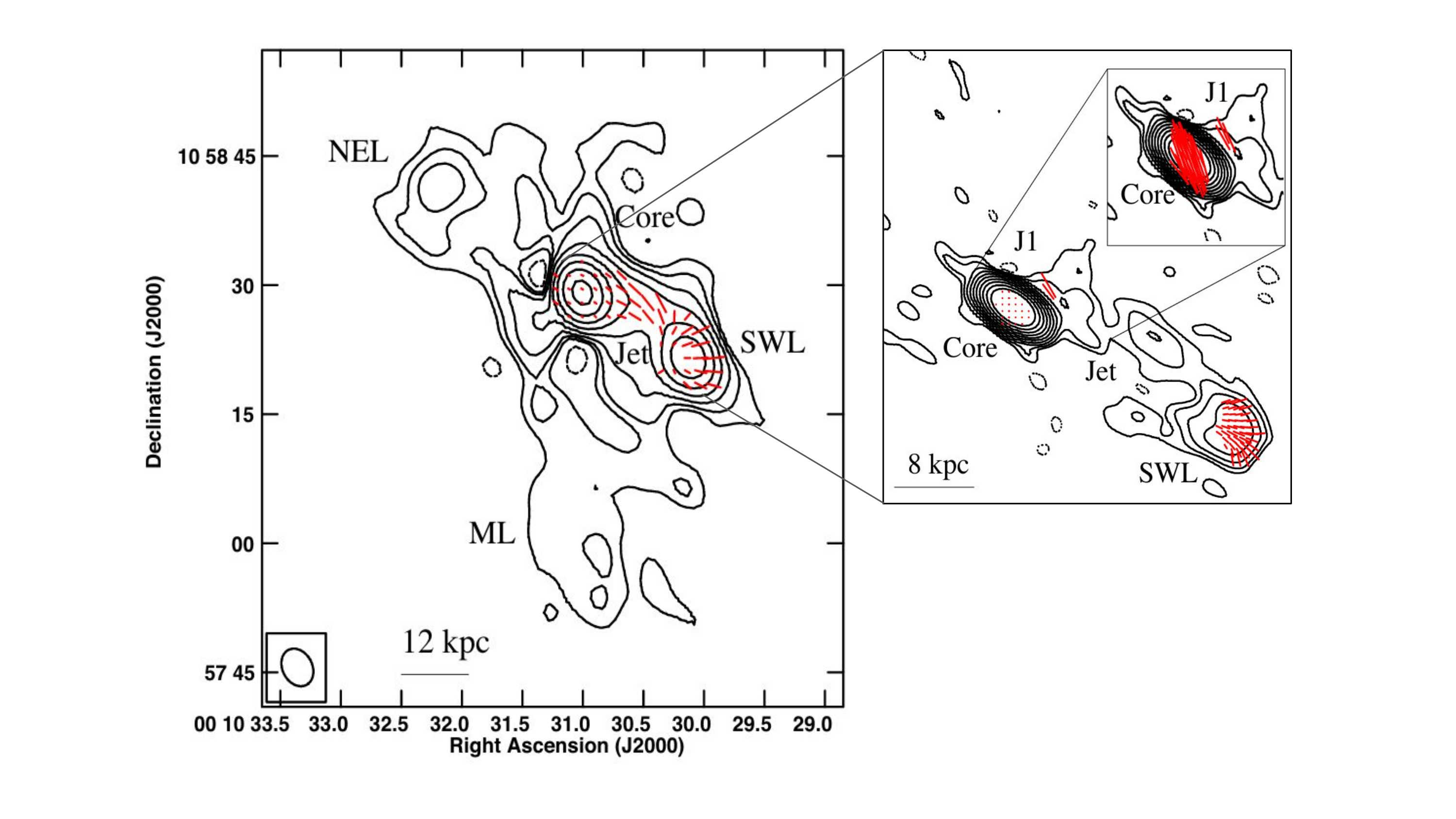
The origin of radio emission in radio-quiet and radio-intermediate active galactic nuclei (AGNs) is still a matter of debate. Primary contenders include low-power jets, winds, star-formation and coronal emission. Recent works have demonstrated the use of radio polarization as an efficient tool to distinguish between jets and winds based on the differences in their polarization signatures. Silpa et al. have carried out a polarization study of a radio-intermediate quasar, III Zw 2, with the upgraded Giant Metrewave Radio Telescope (uGMRT) at 685 MHz and the Karl G. Jansky Very Large Array (VLA) at 5 and 34 GHz. Silpa et al. detect a composite jet + wind radio outflow in III Zw 2. This comprises a collimated jet/jet spine with poloidal inferred magnetic fields embedded inside a broader magnetized wind with toroidal inferred magnetic fields. This ‘wind’ component could be a magnetized accretion disc wind or the outer layers of a broadened jet (like a jet sheath) or a combination of both. The current data cannot differentiate between these possibilities. The curved jet terminates in a bow-shock-like radio structure with inferred magnetic fields aligned with the lobe edges. Silpa et al. also detect a kpc-scale lobe emission to the south that is misaligned with the primary lobes in the uGMRT images. The spectral indices and the electron lifetimes in the misaligned lobe are similar to values in the primary lobe, suggesting that the misaligned lobe is not a relic. Silpa et al. propose that changing spectral states of the accretion disc, and the subsequent intermittent/ sputtering behaviour of the outflow, along with the close interplay between the jet and ‘wind’ could explain the radio-intermediate nature of III Zw 2.
Interplay of jets, winds and emission-line gas in type 2 quasars
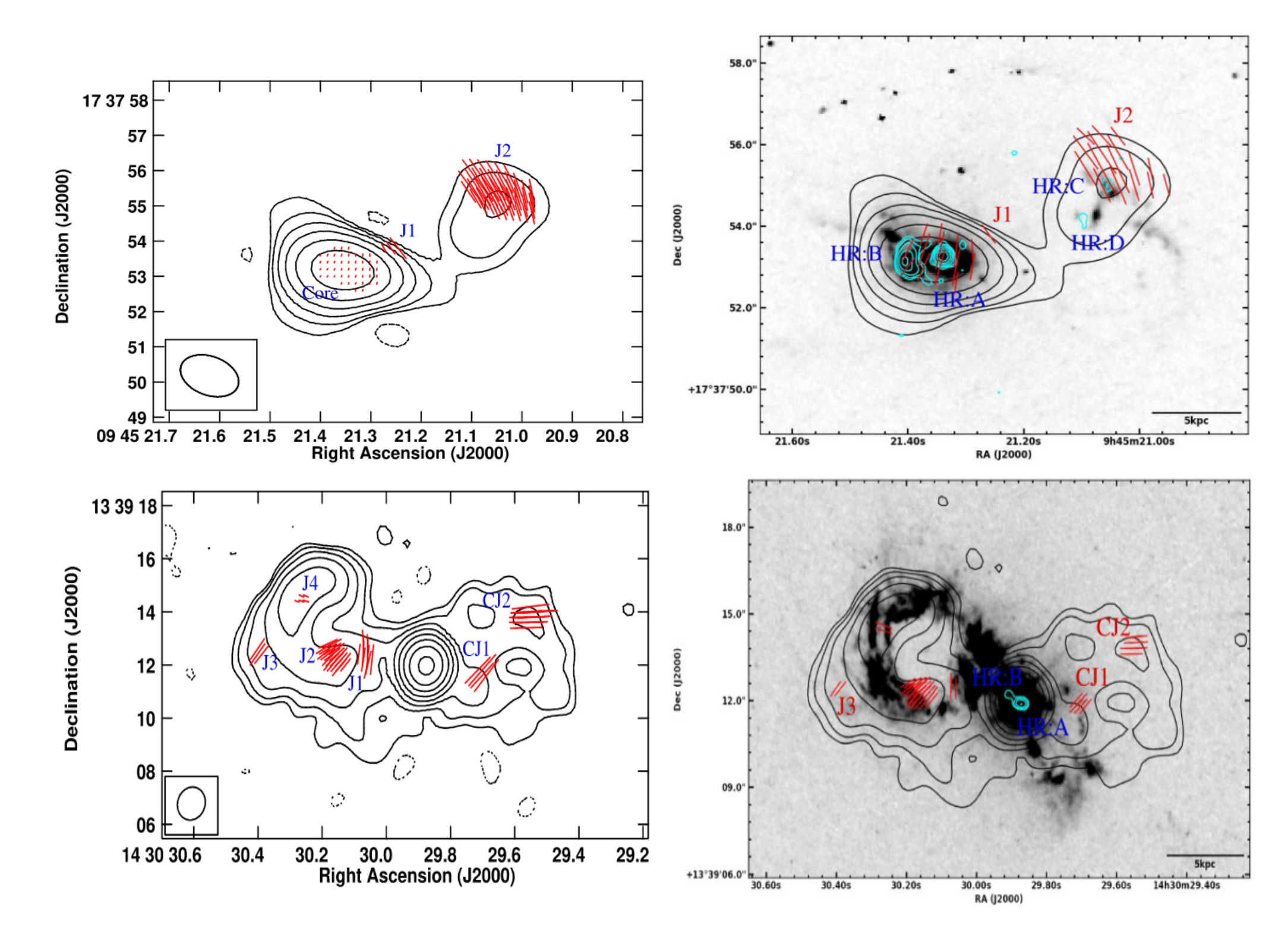
Active Galactic Nuclei (AGNs) are believed to regulate galaxy growth by injecting energy into the surrounding gas which has the effect of either heating and/or expelling the star-forming material or facilitating localized star-formation. While this so-called "recentResults"feedback (in the form of jets/winds) is believed to be a fundamental process of galaxy formation from a theoretical point of view, there are many outstanding questions from an observational point of view. Silpa et al. have carried out a combined radio polarization and emission-line study of five type 2 radio-quiet quasars at z < 0.2 with the Karl G. Jansky Very Large Array (VLA) B-array at 5 GHz and Hubble Space Telescope (HST) [OIII] observations. This work aims to establish the jet/wind origin of the radio emission from these sources and look for signatures of jet-medium interaction in them from a polarization perspective. Polarization is detected in 4 out of 5 sources in the current data, but not in J1010+1413. The morphological, spectral, and polarization properties suggest a jet origin for the radio emission in J0945+1737, J1000+1242, J1010+1413, and J1430+1339 whereas the current data cannot fully discern the origin of radio emission (jet or wind) in J1356+1026. These five sources are known to exhibit a close association between the radio structures and the ionized gas morphology and kinematics. Silpa et al. find an anticorrelation between various polarized knots in the radio and [OIII] emission in these sources, similar to that observed in some radio-loud AGNs in the literature. This suggests that the radio emission is likely to be depolarized by the emission-line gas. The anti-correlation between polarization and ionized gas could be interpreted as an effect of the jet/wind-gas interaction, and a possible source of AGN feedback. By modelling the depolarization effects, Silpa et al. estimate the size of the emission-line gas clouds to be ~(2.8 +/- 1.7) x 10^−5 parsec and the amount of thermal material mixed with the synchrotron plasma to be ~(1.01 +/- 0.08) x 10^6 solar masses in the lobe of J0945+1737 (which exhibits the most prominent polarization signature in its lobe). This work demonstrates that the interplay of jets/winds and emission-line gas is most likely responsible for the nature of radio outflows in radio-quiet AGNs.
Tackling the Unique Challenges of Low-frequency Solar Polarimetry with an SKA-Low Precursor: The Algorithm
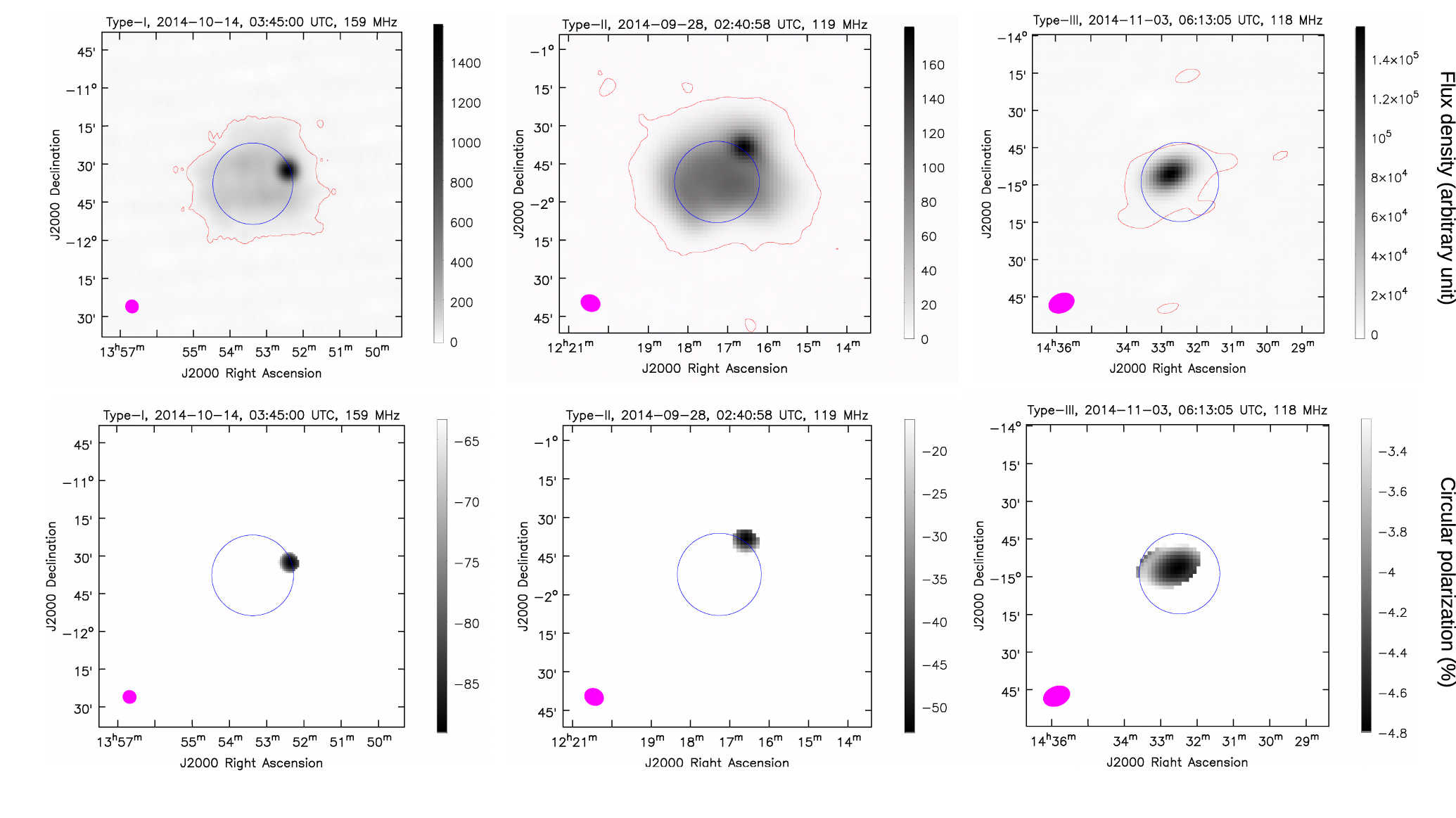
The Sun is a magnetically active star. Its atmosphere, the solar corona, comprises hot magnetised plasma. Coronal magnetic fields are well known to be one of the crucial parameters determining the physics of the solar corona and are a key driver of space weather. Although the importance of the coronal magnetic field has long been appreciated, it is hard to measure the field strength. The polarisation properties of coronal emission at low radio frequencies can, in principle, be used for coronal magnetic field measurements. Precise polarimetry at these frequencies is intrinsically hard and it is made even more challenging by the very large range of brightness temperatures associated with different emission mechanisms (ranging from 10,000 K to 10,000 billion K), the variation in the fractional polarisation from close to 100% to less than 1%, and extreme temporal and spectral variability of the emission. Kansabanik et al. have developed a robust algorithm for accurate polarisation calibration of solar observations with the Murchison Widefield Array (MWA), a Square Kilometre Array (SKA) precursor. The algorithm delivers high dynamic range and high fidelity full Stokes solar radio images with residual leakages on par with the best images today; it is based on the Measurement Equation framework, which forms the basis of all modern radio interferometric calibration and imaging. The figure shows the total intensity and circular polarisation images of type-I, -II, and -III solar radio bursts, made using this algorithm. The red contours in the top panel show the Stokes I emission at 0.5% of the peak emission while the bottom panel shows percentage circular polarisation. The blue circles represent the optical disc of the Sun and the filled ellipses, the resolution of the observations. In all cases, the residual instrumental polarisation is less than 1%. The algorithm has been developed with the future SKA in mind. The high-fidelity spectropolarimetric snapshot solar radio imaging enables the exploration of previously inaccessible phase space and offers a considerable discovery potential.
Insufficient Gas Accretion Caused the Decline in Cosmic Star-Formation Activity 8 Billion Years Ago
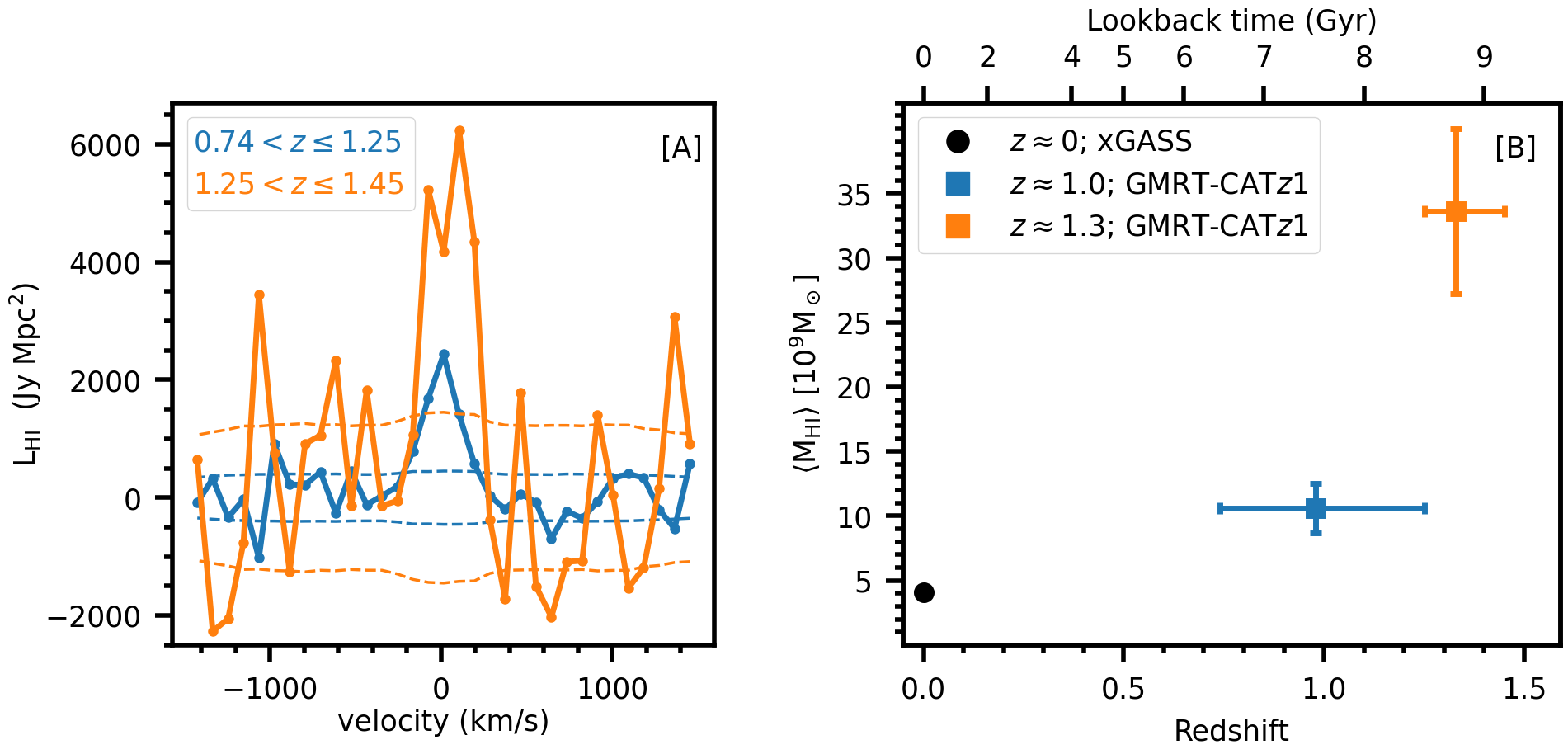
The cause of the decline in the cosmic star-formation rate (SFR) density of the Universe after its peak of approximately 8-11 billion years ago (in the redshift range z ~ 1-3) is a key open issue in galaxy evolution. Addressing this requires us to understand the evolution of the gas mass of galaxies, the fuel from which the stars form. The primary fuel for star formation is neutral atomic hydrogen (HI). The HI content of galaxies can be inferred from the strength of their HI 21 cm emission; however, this hyperfine transition is very weak and difficult to detect from individual galaxies at cosmological distances. Chowdhury et al. used the Giant Metrewave Radio Telescope (GMRT) Cold HI AT z~1 (CATz1) survey to report a measurement of the dependence of the average HI mass of a large sample of star-forming galaxies at redshifts z=0.74-1.45 on their average stellar mass and redshift, by stacking the HI 21 cm emission signals of the individual galaxies. They find that galaxies with stellar masses greater than approximately 10 billion solar masses, which dominate the decline in the cosmic SFR density at z<~1, have HI reservoirs that can sustain their SFRs for only a short period, ~0.9 billion years unless the HI is replenished by accretion of gas from the circumgalactic medium. Remarkably, they also measure a steep decline, by a factor of ~3.2, in the average HI mass of star-forming galaxies, over a period of roughly 1 billion years between z~1.3 and z~1.0. Panel~[A] of the figure on the right shows the stacked HI 21 cm emission signal at z~1.3 (orange) and z~1.0 (blue); the average HI 21 cm signal is clearly detected from both subsamples, with the emission signal at z~1.3 being much stronger than that at z~1.0. Panel~[B] of the figure shows the redshift evolution of the average HI mass of star-forming galaxies over the last 9 billion years; the sharp decline in the average HI mass of galaxies from z~1.3 to z~1.0 is again clearly seen. The observed decline in the average HI mass of star-forming galaxies provides direct evidence that the accretion of HI onto massive star-forming galaxies at z~1 is insufficient to replenish their HI reservoirs on the short timescale required to sustain their SFRs. The results of this study indicate that the decline in the cosmic SFR density at z~1 arises due to the decline in the HI mass of the most massive star-forming galaxies, due to insufficient gas accretion from their surroundings.
Robust Absolute Solar Flux Density Calibration for the Murchison Widefield Array
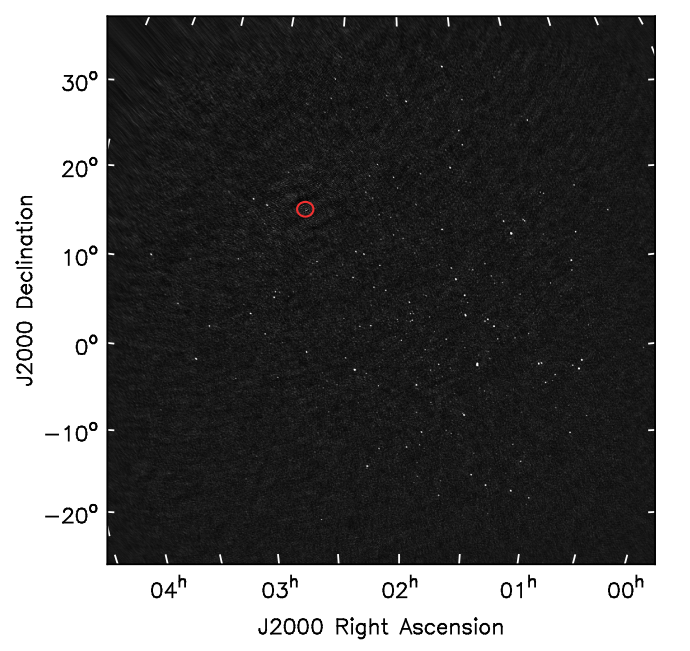
The Sun is the highest flux-density source in the low-frequency radio sky. The flux density of even the quiet Sun exceeds many tens of thousands of Jy at metre wavelengths and can increase by multiple orders of magnitude during periods when active emission is present. Most astronomical sources, on the other hand, have flux densities below a few tens of Jy and only a handful of the brightest sources like Crab, Virgo-A, Cen-A, etc. reach a few thousand Jy. Sensitive radio instruments are optimized for observing faint astronomical sources. This leads to problems for solar flux density calibration as most telescopes require additional attenuation to be introduced in the signal path for solar observations, while most calibrators are too weak to be detected with this additional solar attenuation. In addition to dealing with the inclusion of another antenna-dependent element in the signal chain which needs to be calibrated, wide field-of-view (FoV) aperture array instruments like the Murchison Widefield Array (MWA) face another complication. To avoid contamination from the very strong solar emission, the flux density calibrators are usually observed before sunrise or after sunset. In this work, Kansabanik et al. present multiple independent approaches for absolute flux density calibration of solar MWA data and establish their consistency. Improving on the high-quality images delivered by the AIRCARS pipeline developed by Mondal et al. (2019), Kansabanik et al. present the first-ever detection of more than 80 background galactic and extra-galactic radio sources in the solar FoV, a bit like "recentResults"seeing stars in broad daylight . The figure shows about a 3,600 square degrees FoV at 80 MHz, integrated over 2 minutes of time and over a bandwidth of 2 MHz, with sources down to a flux density of 4.6 Jy. The red circle marks the position of the Sun. The absence of imaging artefacts in the vicinity of the Sun is noteworthy and the RMS noise of the image is only about 1.5 times that of the GLEAM image of the same field. Kansabanik et al. use the GLEAM catalog flux density of these background radio sources to arrive at a robust flux density calibration method for solar observations. The other flux density calibration approaches demonstrated include using the presence of bright sources like Crab and Virgo-A in the solar FoV, and the use of a dedicated calibrator observation with and without the solar attenuators. These flux density calibration methods are a significant improvement over earlier approaches and are independent of the MWA array configuration. They deliver a flux density uncertainty of about 10% for solar observations even in the absence of dedicated calibrator observations and meet the requirements for obtaining accurate solar flux density calibrations for MWA data, needed for several solar scientific applications.
A Fast Radio Burst Progenitor Born in a Galaxy Merger
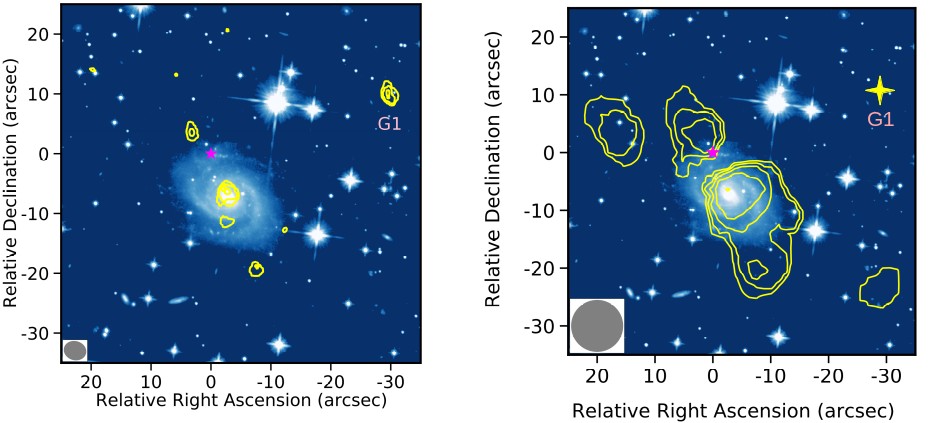
Kaur et al. report the first HI 21 cm mapping study of the neutral atomic hydrogen (HI) in the host galaxy of a fast radio burst (FRB). They used the Giant Metrewave Radio Telescope (GMRT) to carry out a deep observation of a nearby fast radio burst, FRB 20180916B, and find that the FRB host is a gas-rich galaxy but with low star-formation activity. The combination of gas-richness and near-quiescent star-formation indicates that the galaxy is likely to have acquired a significant mass of HI in the recent past. The GMRT images show that the HI spatial distribution is disturbed, with extended HI 21 cm emission detected in a northeastern tail, a counter-tail toward the south, an HI hole between the galaxy center and the FRB location, and a high HI column density measured close to the FRB position. The FRB host galaxy is part of a group with four companions detected in their HI 21 cm emission, the nearest of which is only 22 kpc from the FRB location. The gas richness and disturbed HI distribution indicate that the FRB host has recently undergone a minor merger with a smaller galaxy or a gas cloud, which increased its HI mass, disturbed the HI in the galaxy disk, and compressed the HI near the FRB location to increase its surface density. Kaur et al. propose that this merger caused the burst of star formation in the outskirts of the galaxy that gave rise to the FRB progenitor. The evidence for a minor merger is consistent with scenarios in which the FRB progenitor is a massive star, formed due to the merger event. The two panels of the figure show the GMRT HI 21cm images (in contours) of the FRB galaxy environment, at angular resolutions of (left panel) 3.5 arcseconds and (right panel) 9 arcseconds; the GMRT images are overlaid on an HST image of the galaxy, shown in colour. The high-resolution GMRT image of the left panel, which is sensitive to only the highest HI column densities, shows that the strongest HI 21cm emission arises from (1) the galaxy centre, (2) close to the FRB location, and (3) the gas cloud called G1. The intermediate-resolution GMRT image of the right panel, which is sensitive to lower HI column densities, shows the tail of HI 21cm emission to the north-east, the counter-tail towards the south, and the hole in the HI distribution close to the FRB location (indicated by the magenta star in both panels).
The Nature of HI-absorption-selected Galaxies at z~4
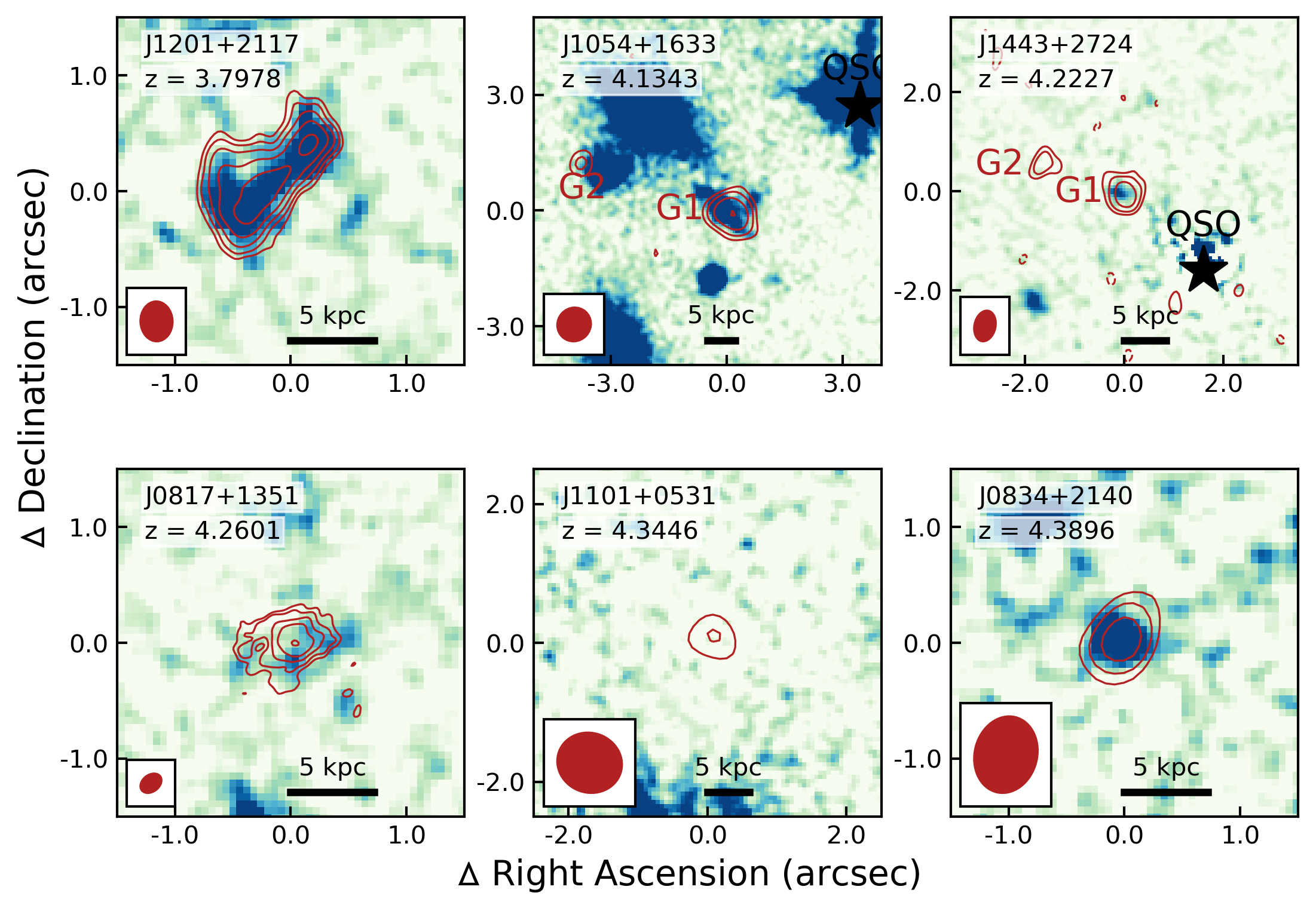
Galaxy populations selected based on luminosity in deep images are biased towards the brighter systems at high redshifts. This luminosity bias can be avoided by identifying high-redshift galaxies via their strong Lyman-alpha absorption signature in the spectra of background quasars. Unfortunately, it has been difficult to identify and characterize such absorption-selected galaxies using the standard optical techniques as the galaxies are much fainter than the background quasars at optical wavelengths. Neeleman et al. (2017, 2019) used the Atacama Large Millimeter/submillimeter Array to pioneer a new approach to identify absorption-selected galaxies at z~4, via their [CII] 158 micron emission. In this paper, Kaur et al. report Jansky Very Large Array (JVLA) and Hubble Space Telescope Wide Field Camera 3 (HST-WFC3) observations of seven [CII] emitters at z~4, aiming to characterize their molecular gas content and star-formation activity. No CO emission was detected from the seven absorption-selected galaxies, yielding upper limits on their molecular gas mass. Rest-frame near-ultraviolet (NUV) emission was detected from four systems, giving an estimate of the star-formation rate (SFR) unobscured by dust for these galaxies. Comparing the dust-unobscured SFR with the total SFR estimated from the 160-micron dust continuum emission, Kaur et al. find that most absorption-selected galaxies do not contain significant amounts of dust. They find that the molecular gas mass estimates and NUV SFR estimates in HI-selected galaxies at z~4 are consistent with those of main-sequence galaxies with similar [CII] and far-infrared luminosities at similar redshifts. The figure shows the HST-WFC3 rest-frame NUV images (in colour) of the seven absorption-selected galaxies overlaid with the [CII] emission (in red contours).