
Science Highlights
On Insufficiency of Homogeneous Models for Solar Coronal Mass Ejections from Modeling Faint Gyrosynchrotron Emission
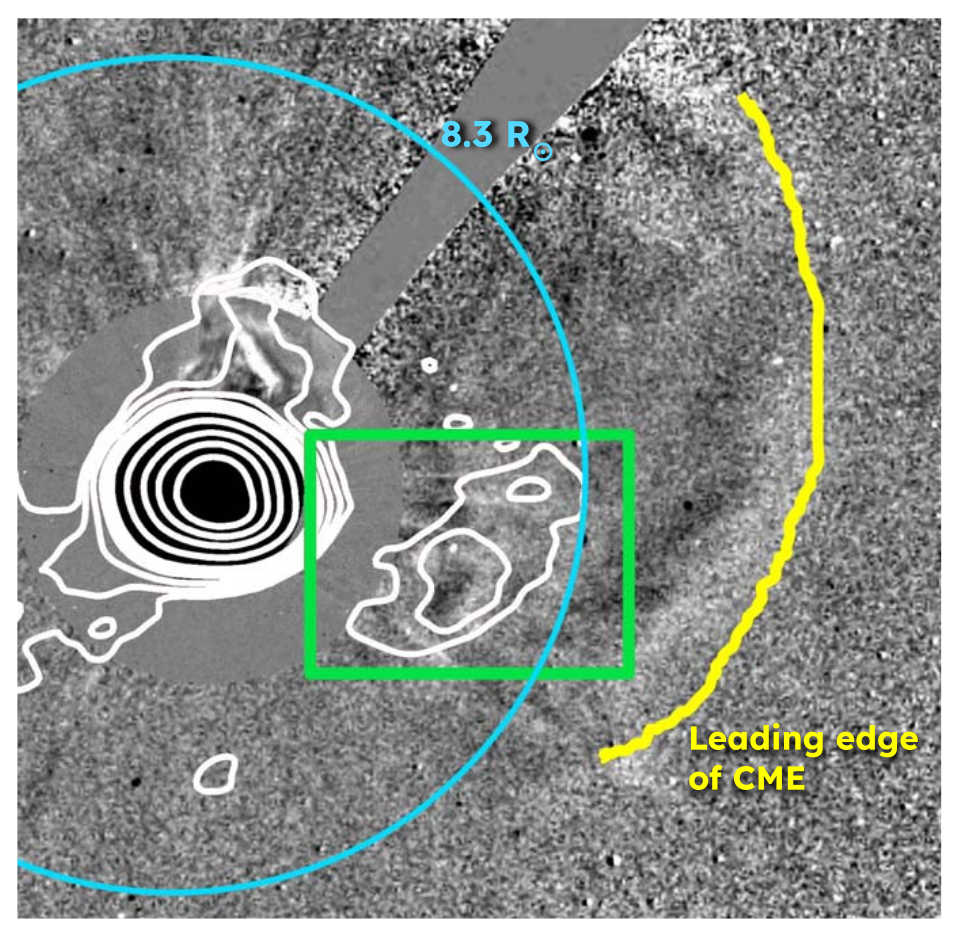
The Sun occasionally ejects large-scale magnetized plasma from its corona into the heliosphere, known as coronal mass ejections (CMEs). These ejections play a crucial role in defining the plasma environment in the heliosphere and determining the space weather near the Earth. The geo- effectiveness of CMEs is primarily determined by their magnetic fields. One promising remote sensing technique to measure CME magnetic fields while they are still in the corona is modeling the gyrosynchrotron (GS) emission from the energetic electrons trapped in the CME plasma. However, detecting the faint GS emission from CMEs is challenging because it needs to be detected in the vicinity of the very bright solar emission from the corona. With the Murchison Widefield Array, it is now possible to routinely obtain high dynamic-range (DR) spectropolarimetric meter-wavelength observations. Using these high-DR solar images, we have successfully detected very faint GS emission from a CME at distances as far as 8.3 solar radii, the largest reported distance so far. The figure shows radio emission intensity overlaid as white contours on a white-light coronagraph image. Besides high DR, the use of high-fidelity polarimetric calibration has enabled the robust detection of circularly polarized emissions from the CME’s GS emission. For the first time, the authors use circularly polarized emission in conjunction with total intensity spectra to constrain GS models. One might expect that including polarimetric measurements would provide more accurate constraints on GS model parameters and help estimate CME plasma properties. However, our findings reveal that GS models assuming a homogeneous plasma distribution along the line of sight (LoS), which has been used in all previous studies, are unable to model both total intensity and circularly polarized emission simultaneously. This indicates that the observational constraints are now sufficiently detailed and sensitive that they may no longer be satisfied by simplistic models. Satisfying these constraints will now require more realistic GS models incorporating inhomogeneous distributions of plasma parameters along the LoS.
An HI-absorption-selected Cold Rotating Disk Galaxy at z~2.193
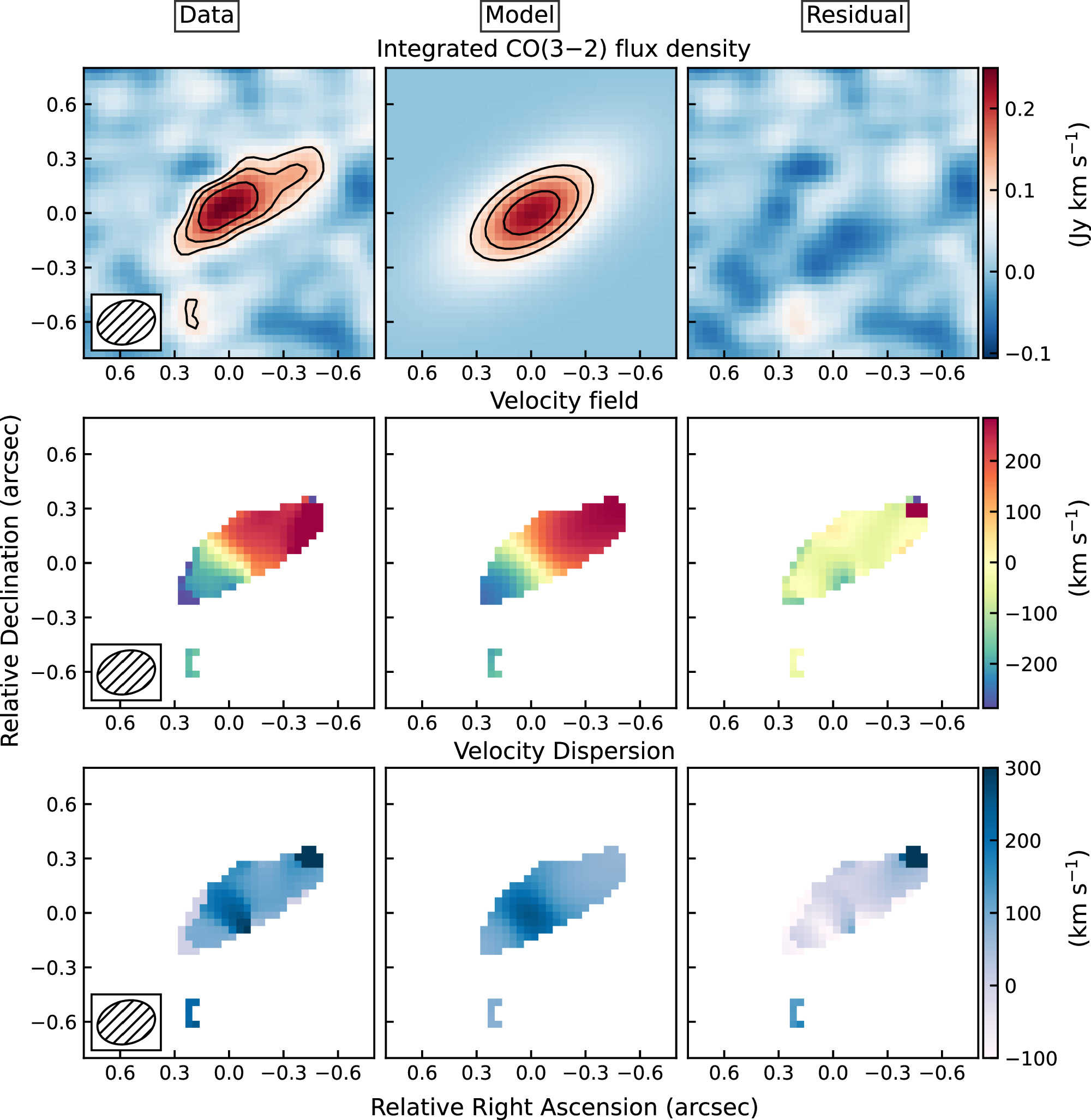
Kaur et al. have used the Atacama Large Millimeter/submillimeter Array (ALMA) to map redshited CO(3-2) emission from a galaxy, DLA-B1228g, associated with the high-metallicity damped Ly-alpha absorber at z=2.1929 toward the QSO PKS B1228–113. At an angular resolution of ~0.32 x 0.24 , the authors find that DLA-B1228g shows extended CO(3-2) emission with a deconvolved size of ~0.78 x 0.18 , i.e., a spatial extent of ~6.4 kpc. The authors detect extended stellar emission from DLA-B1228g in a Hubble Space Telescope (HST) Wide Field Camera 3 image in the F160W filter, corresponding to a rest-frame wavelength of approximately 5000 Angstroms. They further find that H-alpha emission is detected in a Very Large Telescope SINFONI image from only one side of the galaxy. While the clumpy nature of the HST F160W emission and the offset between the kinematic and physical centers of the CO(3-2) emission are consistent with a merger scenario, this appears unlikely due to the lack of strong H-alpha emission, the symmetric double-peaked CO(3-2) line profile, the high molecular gas depletion timescale, and the similar velocity dispersions in the two halves of the CO(3-2) image. Kinematic modeling reveals that the CO(3-2) emission is consistent with arising from an axisymmetric rotating disk with an exponential profile, a rotation velocity of 328 km/s, and a velocity dispersion of 62 km/s. The high value of the ratio of rotation velocity to velocity dispersion, ~5.3, implies that DLA-B1228g is a rotation-dominated cold disk galaxy, only the second case of a high-redshift HI-absorption-selected galaxy identified with a cold rotating disk. The authors use their kinematic modelling to obtain a dynamical mass of 1.5 x 10^11 solar masses, similar to the molecular gas mass of 10^11 solar masses inferred from earlier CO(1-0) studies. This implies that the galaxy is baryon-dominated in its inner regions. The figure shows the results of the kinematical modelling: the three rows show the CO(3–2) integrated line flux density, the CO(3–2) velocity field, and the CO(3–2) velocity dispersion, while the three columns show the ALMA image, the best-fit rotating disk model image, and the residual image obtained after subtracting the model image from the corresponding ALMA image.
In-field Phasing at the Upgraded GMRT
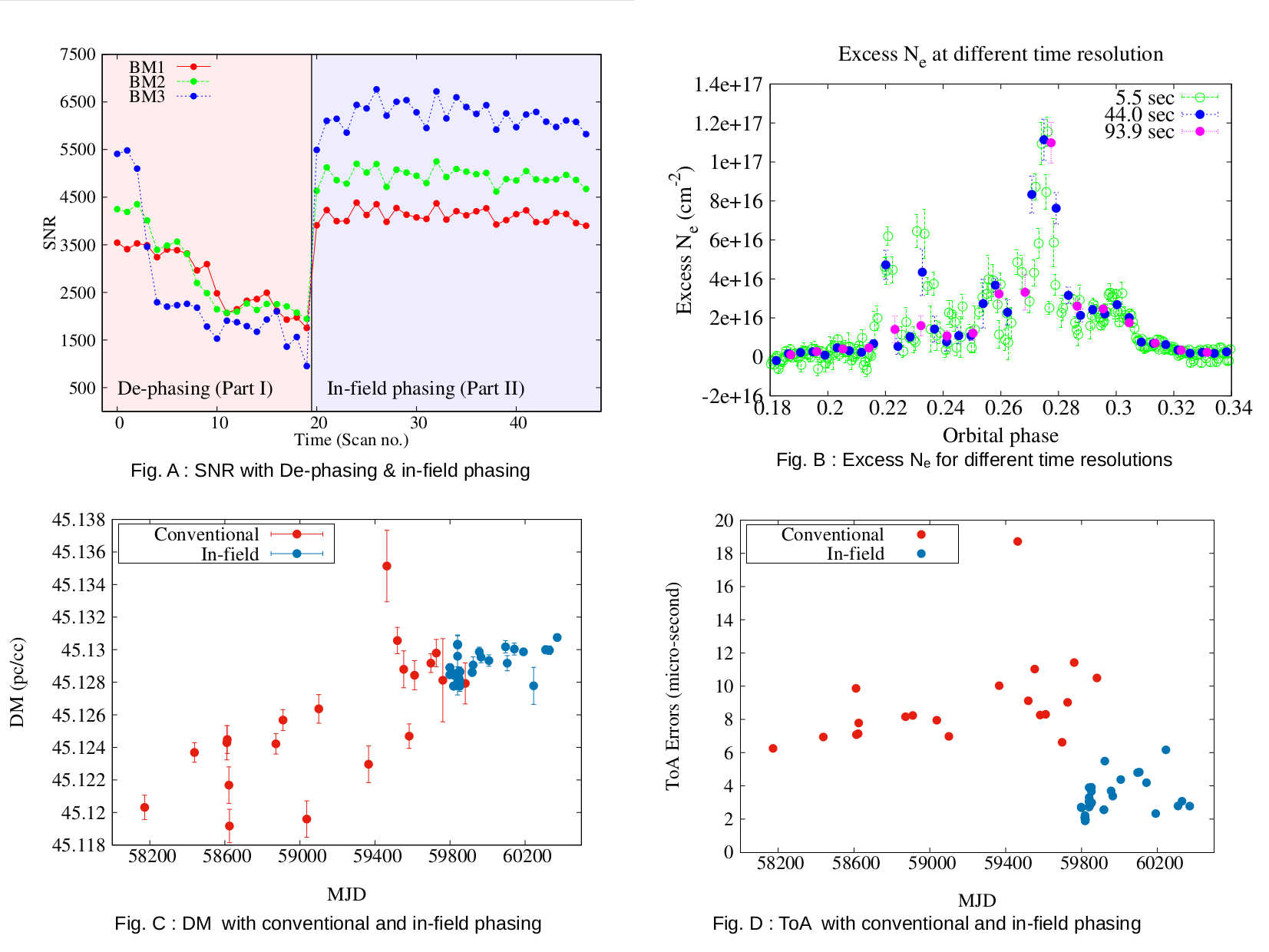
In time-domain radio astronomy with arrays, voltages from individual antennas are added in phase to form a beam, correcting for the ionospheric and instrumental gains. Conventionally, this is done using regular observations of a calibrator source located close to the target. This approach restricts the number of antennas that can be used to form the beam because the signals from more distant antennas tend to decorrelate due to ionospheric phase drifts. Also, this scheme is sub-optimal since it does not correct for the variation of the gains with time and position on the sky, but assumes that the gains are the same on the target source and on the calibrator. In order to mitigate these limitations, Kudale et al. (2024) presented a new methodology (called "recentResults"in-field phasing ), in which the gains on the target source are obtained in real-time, using a model of the sky intensity distribution in the target field. The authors tested the efficacy of in-field phasing via observations of the pulsar B0740-28, simultaneously recording data from three separate phased-array beams (referred to as beam-1, beam-2, and beam-3) with an increasing number of antennas. For the observations shown in Fig A. Part I, the array was phased (using in-field phasing) only once at the start of the observation, while, for the observations of Part II, the array phases were updated every 4 minutes. It is clear that, without in-field phasing, the signal-to-noise ratio (SNR) degrades rapidly, particularly for beam-3, which includes the most-distant antennas. Conversely, with in-field phasing, the SNR is approximately constant, as expected. The authors also demonstrated that in-field phasing significantly improves the sensitivity of upgraded GMRT pulsar observations. With in-field phasing observations of a GMRT-discovered pulsar J1544+4937, one can probe the eclipse region in much more detail by measuring the excess electron density (N_e) at a range of time resolutions, which reveals the possible clumpy nature of eclipsing material around the binary companion (as shown in Fig. B). The authors achieved approximately 3 times better dispersion measure (DM; see Fig. C) and time-of-arrival (ToA; see Fig. D) precision with in-field phasing compared to conventional phasing.
Flux Density Stability and Temporal Changes in the Spectra of Millisecond Pulsars Using the GMRT
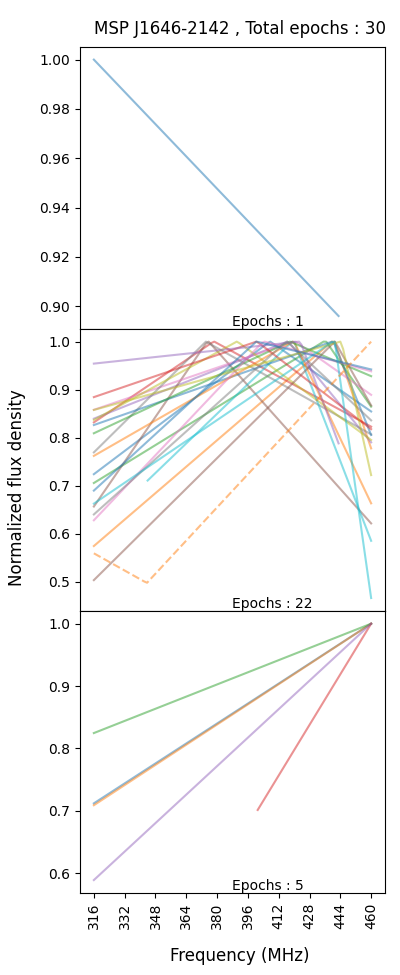
Even though the millisecond pulsar (MSP; having a spin period < 30 ms) population has increased over the last two decades (by about a factor of 4), MSP spectral studies are still in their infancy as compared to those of normal pulsars. This is primarily because MSPs are inherently faint sources, due to which high sensitivity is needed for such studies. Over the last decade, such studies have become possible due to the advent of highly sensitive wideband telescopes and receivers such as the upgraded GMRT (uGMRT), LOFAR, the Ultra-Wideband Low (UWL) receiver on Parkes, etc. This paper presents an investigation of the spectral properties of 10 MSPs discovered by the uGMRT, observed from 2017 to 2023 with the Band-3 (300–500 MHz) and Band-4 (550–750 MHz) receivers. The authors report a range of full band and time-averaged spectral indices from ∼0 to -4.8 for the 10 MSPs of the sample. For every MSP,  the mean flux density across 7–8 uGMRT subbands, each with a bandwidth of approximately 25 MHz, and spanning the frequency range 300-750 MHz, was calculated and temporal changes in the in-band spectra (flux densities across subbands) were observed. Using the temporal variations of the band-averaged flux density, the authors estimated the refractive scintillation parameters for 8 MSPs of the sample. As far as refractive scintillation is concerned, it is typically difficult to break the degeneracy between effects arising from the interstellar medium, the presence of binary companions, and intrinsic variations in the flux density and spectrum of the target MSP. The observed temporal changes of the in-band spectra were classified into three categories based on the nature of the best-fit power law: spectra with single positive spectral indices, with broken power-law spectral indices, and with single negative spectral indices were found. These categories are illustrated in the adjacent figure, with the bottom, middle, and top panels representing the three types. Indications of a low-frequency turnover (change of spectral index from positive to negative values) and temporal variations of the turnover frequency were noted for all the MSPs. Such temporal changes in spectral behavior have implications for other research areas on pulsars like wideband timing studies, predicting the population of existing pulsars, providing realistic estimates of the discovery potential of pulsar surveys, and constraining the emission mechanism of MSPs. This paper presents the first systematic investigation probing temporal changes in MSP spectra, as well as in the turnover frequency. Future explorations with the aim of modeling the MSP spectra can provide vital insights into the intrinsic emission properties of MSPs and the properties of the interstellar medium.
The HI mass function of star-forming galaxies at z~1
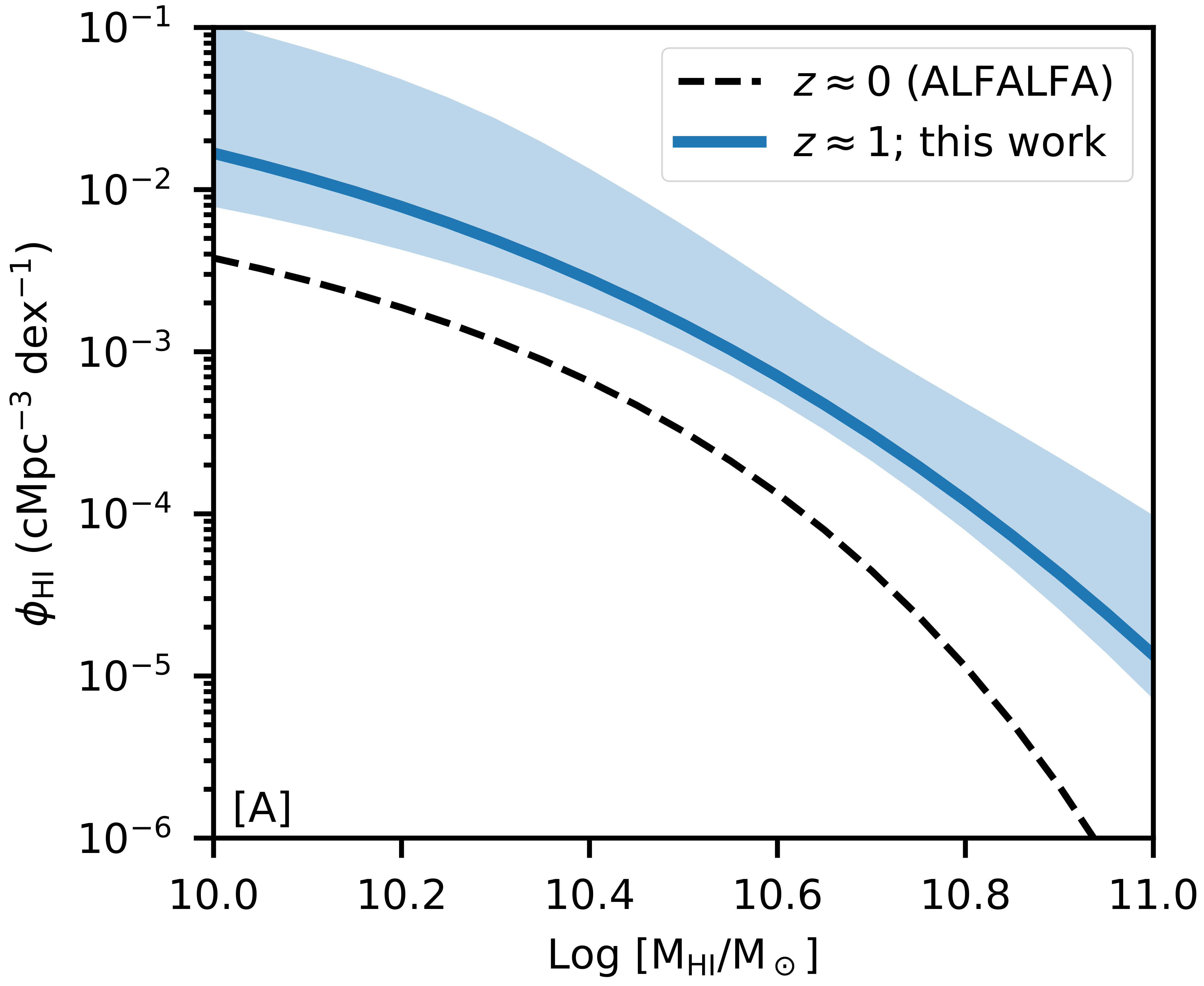
Neutral atomic hydrogen (HI) is the primary fuel for star formation, and thus a key baryonic constituent of galaxies. Understanding the evolution of the HI content of galaxies with cosmological time is thus critical for an understanding of galaxy evolution. A basic descriptor of the HI content of galaxies at any epoch is the \"HI mass function\" (HIMF), the number density of galaxies of a given HI mass as a function of the HI mass. Unfortunately, the weakness of the HI 21 cm line, the only tracer of the atomic hydrogen content of galaxies, has meant that little is known about the HIMF at cosmological distances. Chowdhury et al. used a recently-introduced approach, based on the stacking of 21cm emission signals from a large number of galaxies at z~1 to measure the average HI mass of the population, to obtain the first estimate of the HIMF of star-forming galaxies at a redshift of 1, approximately 8 billion years ago. These authors obtained the HIMF at z~1 by combining (i) their measurement of the average HI mass of star-forming galaxies at z~1 as a function of the blue-band luminosity, and (ii) a literature estimate of the number density of galaxies at the same epoch, also as a function of the blue-band luminosity. The dependence of the average HI mass of galaxies on the blue-band luminosity was obtained by stacking the 21cm signals from galaxies in different bins of blue-band luminosity, to measure the average HI mass in each luminosity bin. The adjacent figure shows the authors measurement of the HIMF of star-forming galaxies at z~1 (blue line) and the HIMF in the local Universe (black dashed line); the shaded blue region shows the uncertainty in the estimate of the HIMF at z~1. It is clear from the figure that the number density of galaxies with HI masses greater than 10 billion solar masses is far greater at z~1 than in the local Universe. Indeed, Chowdhury et al. find that such massive galaxies were roughly 4-5 more numerous in the early Universe, 8 billion years ago, than in the Universe today. This paper thus provides the first statistically significant evidence for evolution in the HIMF of galaxies from the epoch of cosmic noon.
The GMRT High-resolution Southern Sky Survey for Pulsars and Transients. VII. Timing of the Spider Millisecond Pulsar PSR J1242–4712
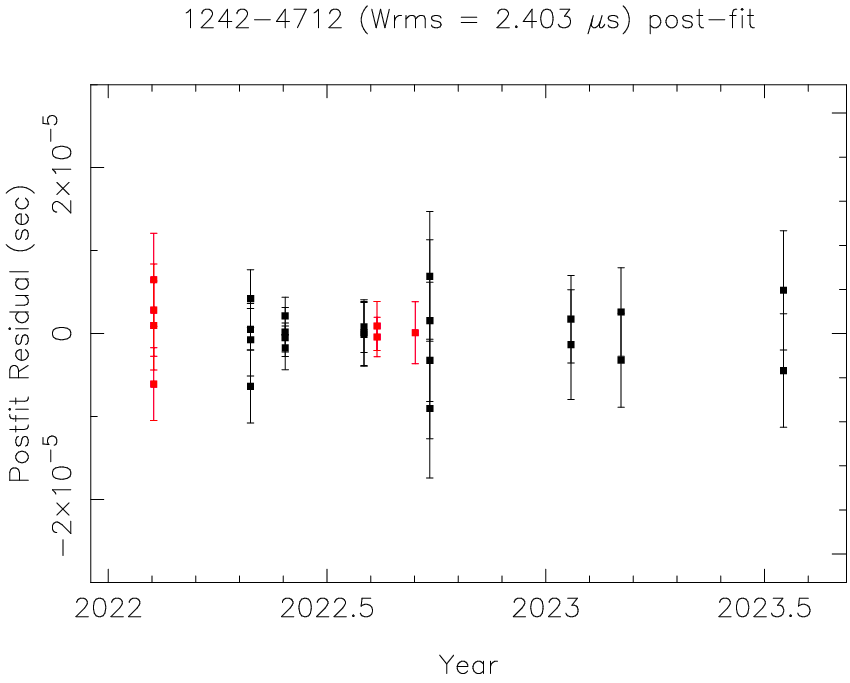
Millisecond Pulsar (MSP) binaries in the Galactic field serve as valuable indicators of binary evolution. After accretion, the intense pulsar wind can wear away the companion star resulting in the creation of MSP binaries with very low-mass companions. These MSPs with mostly hydrogen-rich, nondegenerate companions in compact binary orbits (orbital periods < 1 days) are classified as \"spider\" MSPs. In these compact systems, the highly energetic wind from the pulsar ablates the companion, leaving ionized material in the orbit which causes an eclipse of the pulsar’s radio emission. Such eclipsing MSP systems can aid in the understanding of properties of the low-mass companions in tight binary orbits, the plasma properties of the eclipse material, mass flow from the companion driven by a relativistic pulsar wind, and orbital properties in a strong gravitational potential. Ghosh et al. 2024 present the timing solution for such a 5.31 ms spider millisecond pulsar (MSP) J1242-4712, discovered with the uGMRT. Using the coherently dedispersed observations from uGMRT bands 3 and 4, they achieved an rms timing residual of 2.4 micro-seconds (see figure). They found that PSR J1242-4712 orbits a companion of minimum mass 0.08 solar masses, with an orbital period of 7.7 hr, and occupies a relatively unexplored region in the orbital period versus companion mass space for the spider MSP population. They also find that PSR J1242−4712 eclipses for a very short duration near superior conjunction of the pulsar (orbital phase ∼ 0.23-0.25) below 360 MHz and reported mini-eclipses at other orbital phases. From the observed eclipses and significant orbital period variability in the timing solution, the authors concluded that PSR J1242-4712 may be a helium star−white dwarf binary, but has a semi- or non-degenerate companion, indicating that this is a \"spider\" MSP. However, the optical counterpart for this system could not be identified, which is observed for the majority of other redback systems. This optical nondetection could be attributed to reddening due to distance. Positioned within an ambiguous region between the conventional black widow and redback characteristics, this system emerges as a noteworthy and unusual redback variant, with properties common to both black widows and redbacks. The findings of this study suggest a category of millisecond pulsars that share properties bridging these two subclasses of spider binary systems.
Shock-driven synchrotron emission from the 2021 outburst of recurrent nova - RS Ophiuchi
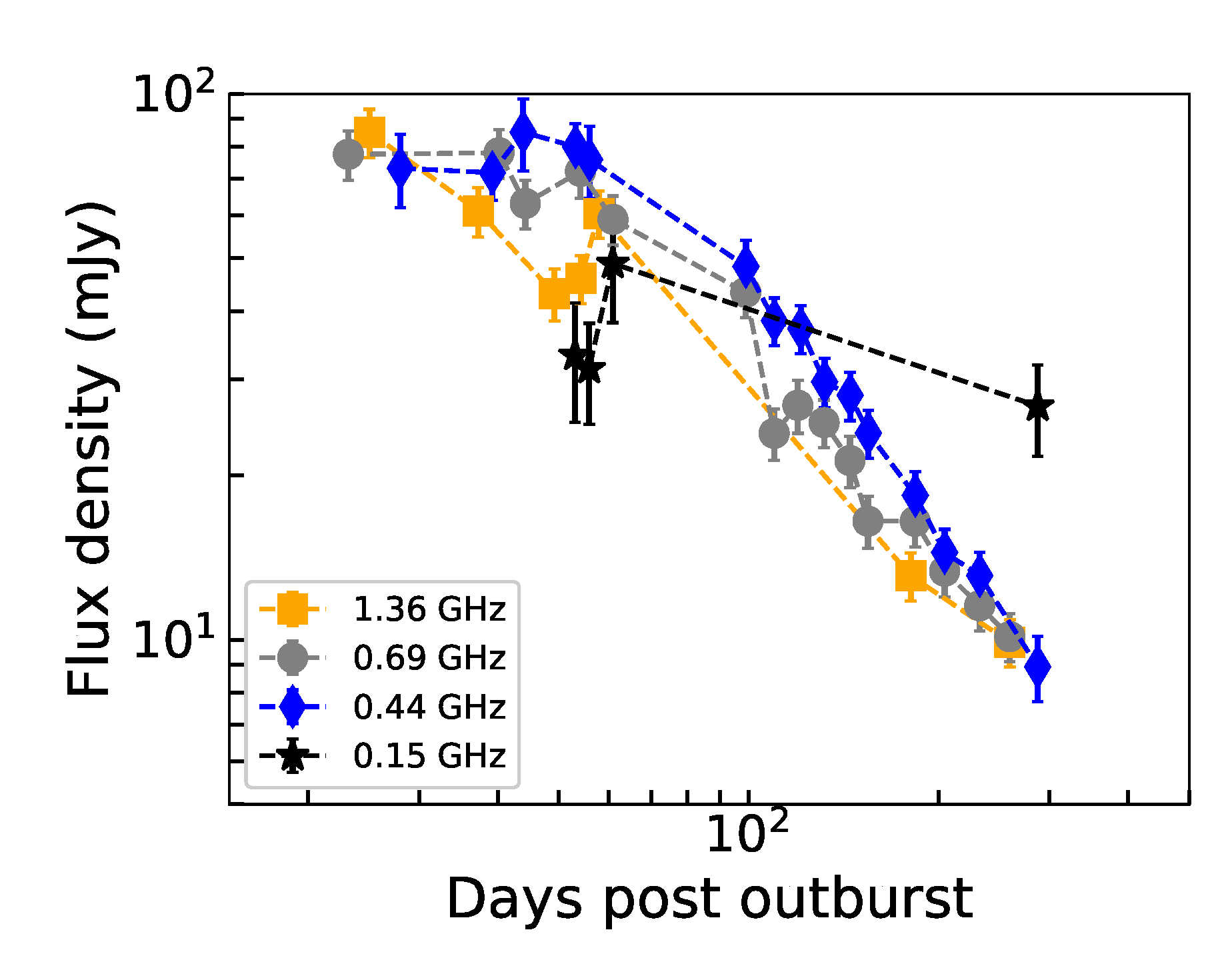
Novae are spectacular astrophysical events that happen in binary systems comprising a white dwarf (WD) and a non-degenerate stellar companion. The WD accretes matter from the companion star and forms a layer at its surface. Once the accreted mass reaches a critical value, the accretion layer undergoes unstable nuclear reactions releasing enormous amounts of energy that leads to the eruption of the accreted envelope. These luminous eruptions are primarily detected as Galactic optical transients termed as novae. Recurrent novae belong to a sub-class of novae with more than one recorded outburst. Low-frequency radio emission from novae is understood to be shock-driven synchrotron radiation that arises due to the interaction between the fast-moving nova ejecta and the stellar wind of the companion star. Studying this radio emission is extremely interesting as it carries information about the shock from the outburst and the density of the circumbinary medium (CBM). However, there are only 3 recurrent novae with detailed low-frequency observations. Nayana et al. (2024) carried out extensive radio monitoring of the 2021 outburst of the Galactic recurrent nova RS Ophiuchi with the GMRT at frequencies of 150 MHz to 1.4 GHz, from 27 to 287 days after the outburst. The radio light curves (see the figure, which which shows the light curves at 1.36 GHz, 690 MHz, 440 MHz, and 150 MHz; reproduced from Nayana et al. (2024, MNRAS, 528, 5528) are best represented by a two-component synchrotron emission model where the emission at early times is suppressed by free-free absorption from the clumpy ionized CBM. The authors interpret the two-component scenario to be a natural consequence of the bipolar ejecta geometry as revealed by the high-resolution radio imaging of Munari (2022). They compare the synchrotron emission from the previous outbursts of RS Ophiuchi, in 1985 and 2006, with that of 2021 and find that the number density of particles in synchrotron-emitting plasma is higher in the 2021 outburst. They obtain a mass-loss rate of the companion star that is consistent with the mass-loss rates of Galactic red-giant branch stars.
Decade-long Timing of Four GMRT Discovered Millisecond Pulsars
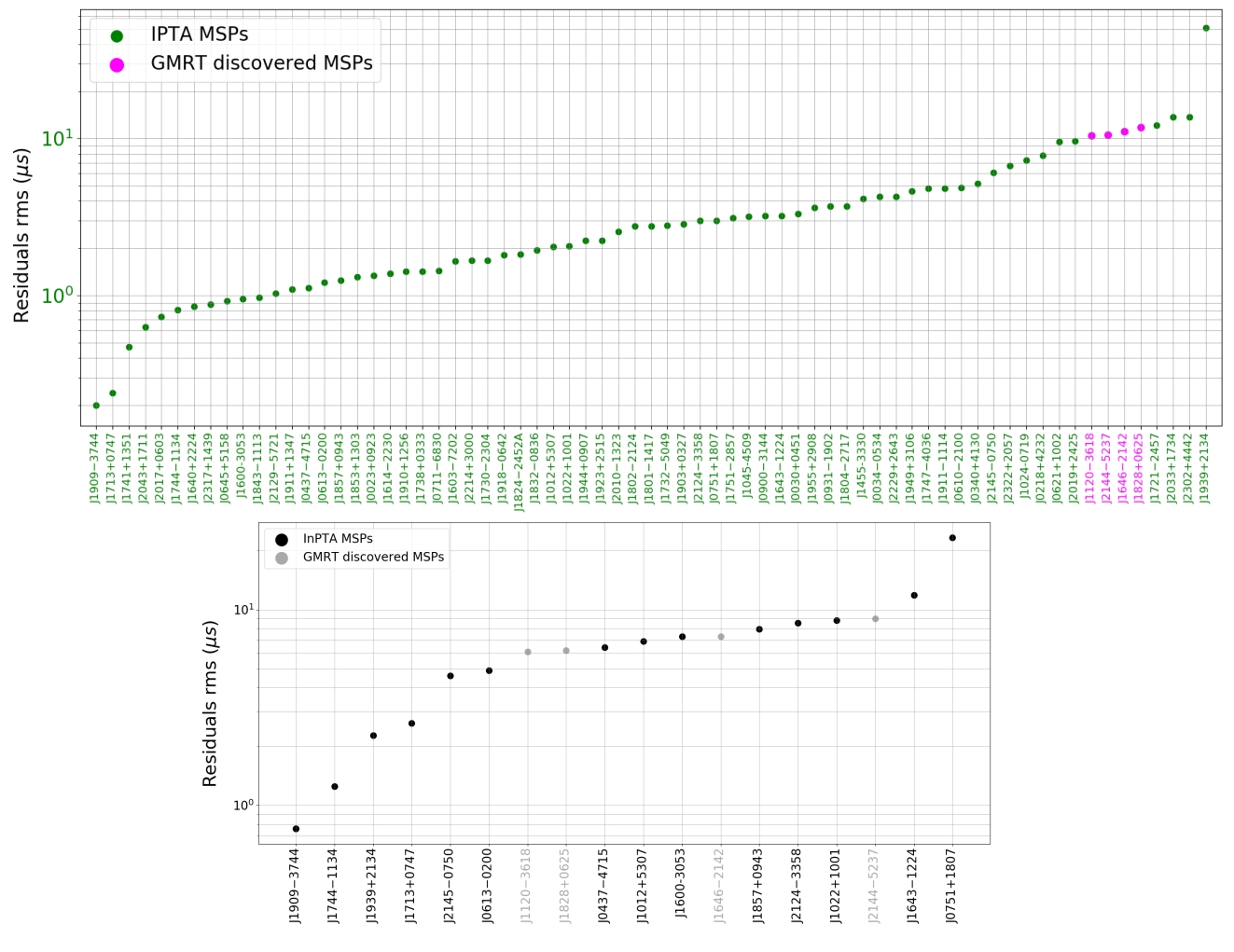
Various cosmological models predict the presence of an isotropic stochastic gravitational wave (GW) background that was created in the early phase of the universe (e.g., Carr 1980). It has been proposed that a set of well-timed MSPs (referred to as a pulsar timing array, or PTA) provides an excellent opportunity to identify the influence of such GW background on the time of arrivals (ToAs) of signals from MSPs. The number of well-timed MSPs included in the PTAs is the most important factor in accelerating the detection of the GW background. The discovery and timing follow-up of millisecond pulsars (MSPs) are necessary not just for their usefulness in the PTAs but also for investigating their own intriguing properties. Sharma et al. (2024) provided the findings of the decade-long timing of four MSPs discovered by the Giant Meterwave Radio Telescope (GMRT), including their timing precision, model parameters including newly detected parameters like proper motions. The authors compared the timing results for these MSPs before and after the GMRT upgrade in 2017 and characterized the improvement in timing precision due to the bandwidth upgrade. Sharma et al. (2024) discussed the suitability of these four GMRT MSPs as well as the usefulness of the decade-long timing data for PTA experiments. The figure compares the timing precision obtained for the four GMRT-discovered MSPs to that for the 65 MSPs reported in the International PTA s second data release (Perera et al. 2019). In addition, it presents a comparison between the timing precision of the four GMRT MSPs and the 14 PTA MSPs reported in the Indian PTA s first data release (Tarafdar et al. 2022). It illustrates that these data sets may aid in the global effort to improve the signal-to-noise ratios of recently detected signatures of gravitational waves in cross- correlation statistics of residuals of MSPs.
Spectroscopic Imaging of the Sun with MeerKAT: Opening a New Frontier in Solar Physics
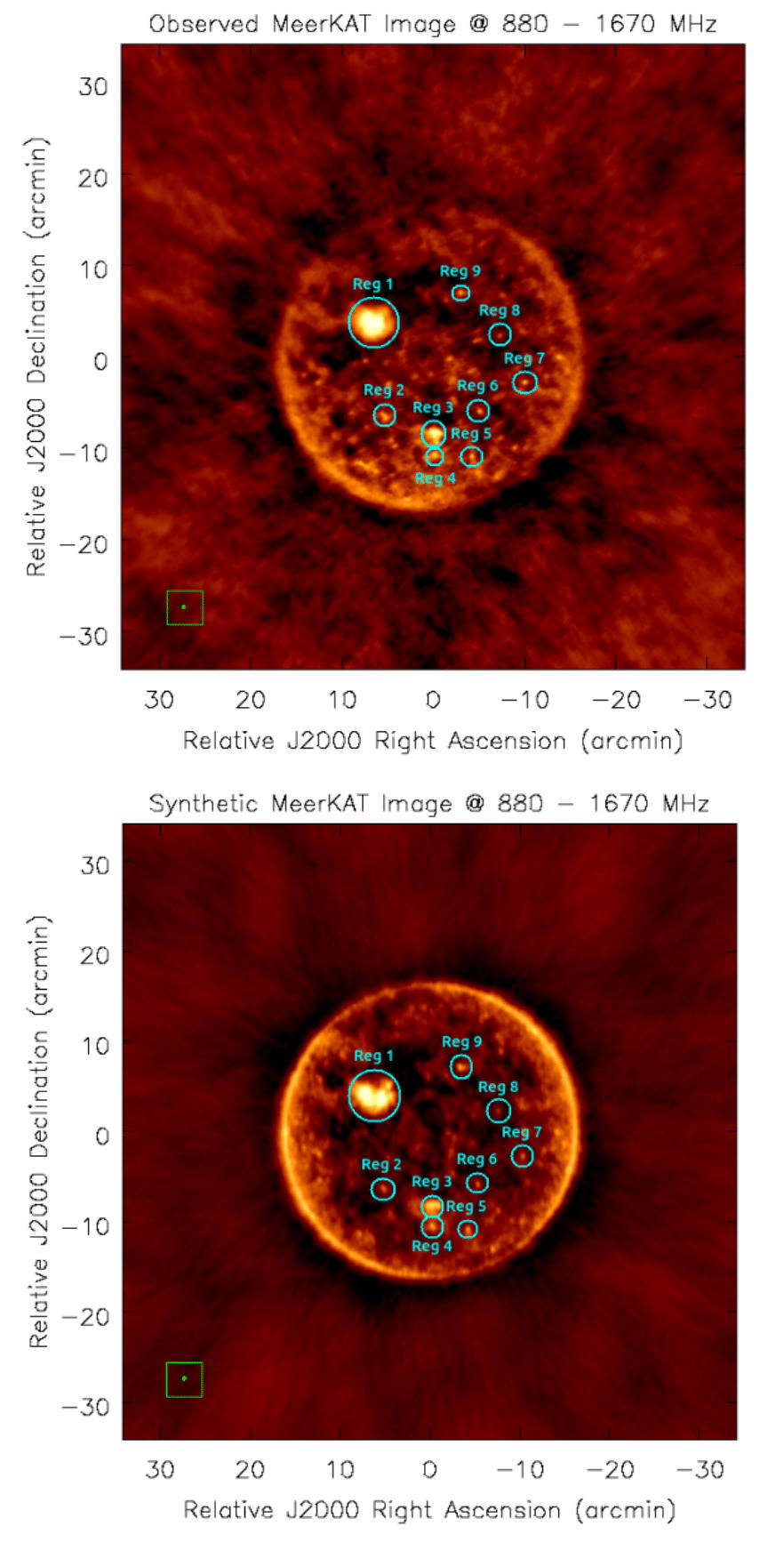
Solar radio emissions provide several unique diagnostics tools for the solar corona, which are otherwise inaccessible. However, imaging the highly dynamic coronal emissions spanning a large range of angular scales at radio wavelengths is extremely challenging. Due to its large number of antennas, MeerKAT radio telescope is possibly the globally best-suited instrument at GHz frequencies for providing high-fidelity spectroscopic snapshot solar images. At these frequencies, the Sun has a much higher flux density than any other astronomical source in the sky. Hence, observing the Sun with sensitive general-purpose radio telescopes like MeerKAT requires one to attenuate the solar signal very substantially for optimum instrument operation. Kansabanik et al. 2024 achieve this using an unconventional approach - rather than pointing straight at the Sun, the MeerKAT dishes are pointed 2.6 degrees away from the Sun. This effectively attenuates the solar signal by a factor of about 1000 and allows them to observe the Sun without saturating the telescope systems. The MeerKAT radio image of the Sun (top panel) shows extremely good morphological similarities with the EUV image as well as the simulated radio image (bottom panel) at corresponding frequency. The MeerKAT image comes from 15 minutes of observations. The observed and simulated images are remarkably similar, cyan circles mark corresponding features spanning a range of sizes and intensities. The observed spectra of these features are also consistent with the simulated spectra from synthetic MeerKAT images. This demonstrates the high fidelity of these images. The authors show that below ∼900 MHz MeerKAT images can recover essentially the entire flux density from the large angular-scale solar disk. Not surprisingly, at higher frequencies, the missing flux density can be as large as ∼50%. However, it can potentially be estimated and corrected. This work marks the first step towards commissioning solar observation with MeerKAT, which will enable a host of novel studies. This will not only make accessible a large unexplored phase space with significant discovery potential but also pave the way for solar science with the upcoming Square Kilometre Array-Mid telescope, for which MeerKAT is a precursor.
First Systematic Study Reporting the Changes in Eclipse Cutoff Frequency for Pulsar J1544+4937
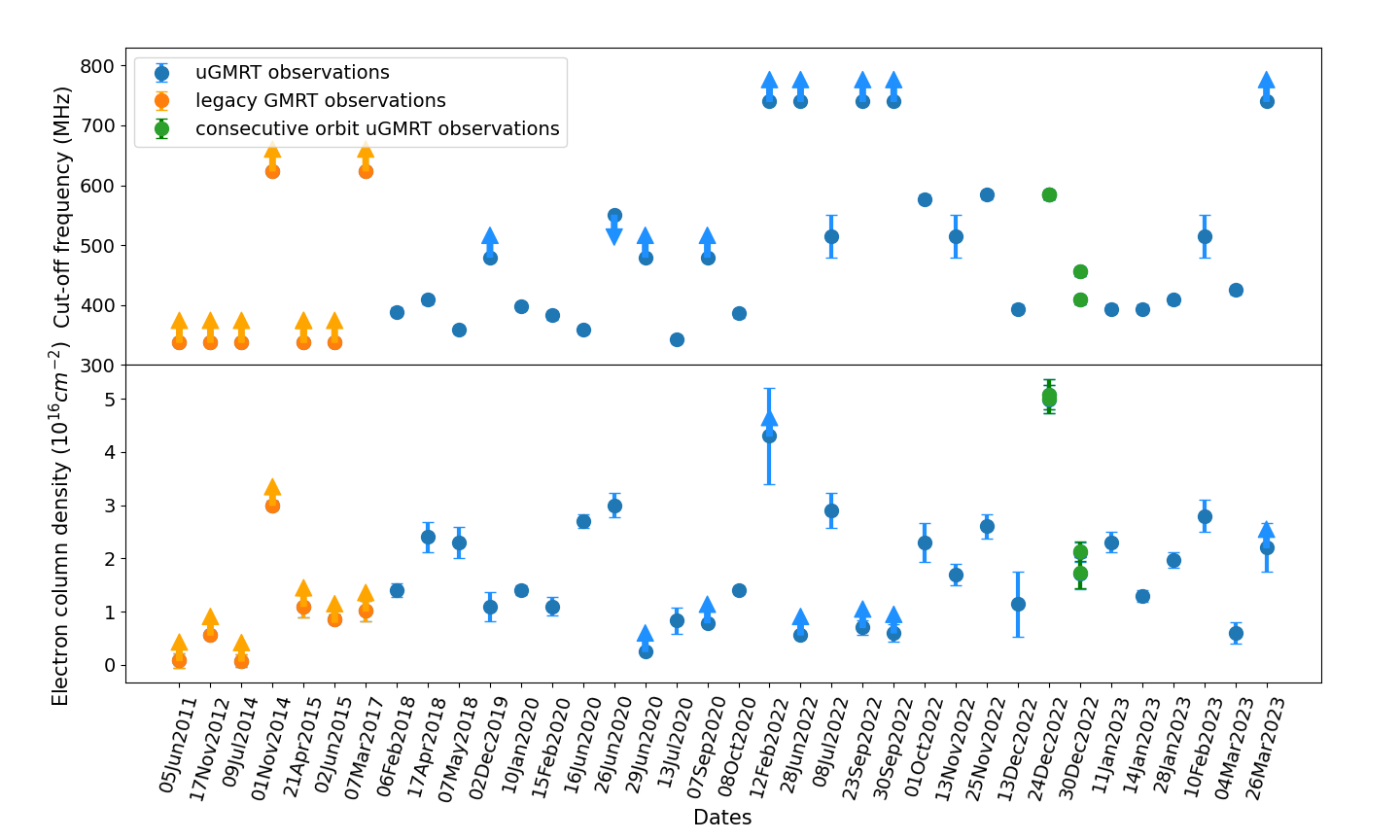
Black widow (BW) millisecond pulsars (MSPs) are compact binaries in which the energetic wind from the pulsar ablates material off the companion. The ablated material of the companion is assumed to cause eclipses in these systems, where approximately 10% of the binary orbit is obscured. The observed eclipses are frequency-dependent, with the pulsed signal disappearing below a certain frequency, generally denoted as the eclipse cut-off frequency. Kumari et al. (2024) conducted the first systematic monitoring of the temporal changes of the eclipse cut-off frequency in the Fermi BW MSP J1544+4937, which was originally discovered by the GMRT (Bhattacharyya et al. 2013), with a spin period of 2.16 ms. Kumari et al. find drastic changes in the eclipse cut-off frequency of PSR J1544+4937: such strong variations in the cut-off frequency have not been reported for this or any other spider MSP. The authors found significant changes in the eclipse cut-off frequency on timescales of a few days, as shown in the figure, with a maximum change of more than 315 MHz between observations separated by 22 days. In addition, Kumari et al. (2024) observed a change of about 47 MHz in the eclipse cut-off frequency between adjacent orbits, i.e. on timescales of about 2.9 hours. The authors inferred that such changes in the eclipse cut-off frequency are likely to arise from a dynamically evolving eclipse environment, where, along with changes in the electron density, the magnetic field could also be varying. They also reported a significant correlation between the eclipse cut-off frequency and the mass loss rate of the companion. This study provides the first direct evidence of the mass loss rate affecting the frequency-dependent eclipsing in a spider MSP.